Best Outdoor Kitchen Countertop Material for Savannah, GA
Granite and porcelain are the two best countertop materials for a Savannah outdoor kitchen, with properly sealed concrete a solid third when it is built for the coast. Each one handles UV, moisture and heat together, which is the real test here. Savannah stacks long hot summers, strong sun, heavy humidity, afternoon thunderstorms and salt air on the same slab, and a material that survives only one of those will fail in time.
Why Savannah Is Hard on an Outdoor Counter
An indoor countertop never sees a summer thunderstorm or a July afternoon at full sun. An outdoor one sees both in the same day, then sits in damp air overnight. Add salt carried inland on coastal breezes and the leaf, acorn and pollen drop from live oaks, and the surface is under constant low-grade attack.
That is why a material that looks great in a showroom can disappoint on a patio. The question is not "which stone is prettiest" but "which surface stays stable in sun, stays dry enough to resist mildew, and shrugs off grill heat."
Granite: The Dependable Default
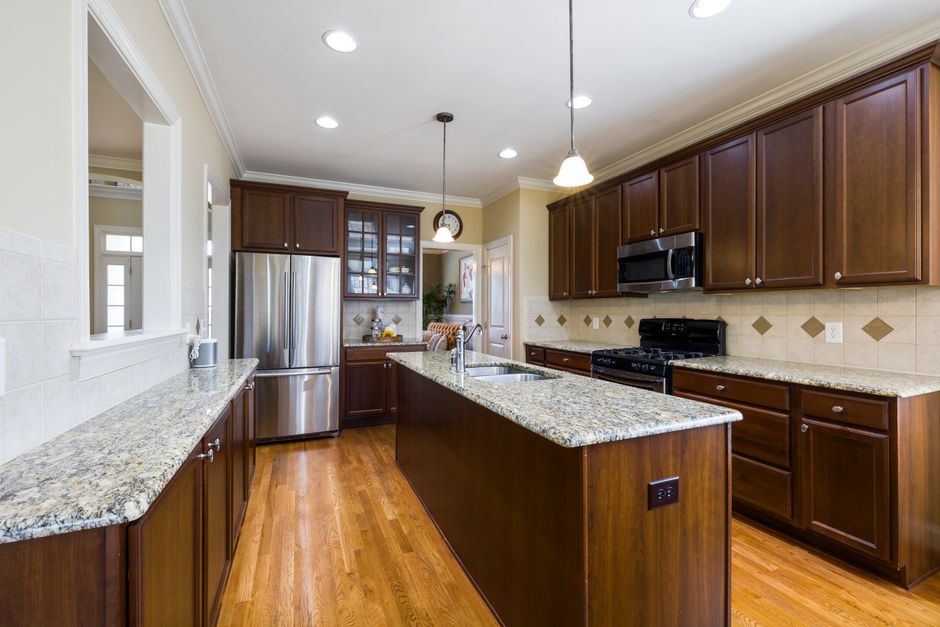
Granite is the most dependable natural stone for an open outdoor kitchen. It tolerates sun, rain and grill heat well, and it does not rely on a resin binder that sunlight can break down.
Two cautions apply:
- Granite varies. Some varieties are far more porous than others. Ask the fabricator about the specific slab, not granite in general, and never assume it needs no sealing.
- Dark slabs get hot. A dark slab in direct Savannah sun can be too hot to touch comfortably by midafternoon. A lighter color helps, and so does a pergola or roof over the prep area.
Pick the Finish Carefully
A flamed or brushed finish gives better grip when wet and hides wear and water spotting better than a high polish. Stone flaming opens the surface texture, so a flamed slab usually needs sealing more often than a polished one. For a counter that gets rained on, the texture is usually worth the extra upkeep.
Porcelain and Sintered Stone: Strong, With One Weak Point
Porcelain and sintered stone slabs are UV stable, very low in porosity and heat resistant. That combination suits humid, sunny conditions well, and the low porosity means less worry about mildew taking hold in the surface.
The weak point is the edge. Ask for an eased or mitered edge, and check whether the pattern runs through the body of the slab or is only printed on the surface. A chip in a surface-printed slab shows a different color underneath. These slabs are tough, but not chip proof or indestructible.
Concrete: Custom Shapes, With Coastal Conditions
Concrete can be cast in nearly any shape and color, which makes it appealing for curved bars and a custom kitchen island. A few facts should be settled before you commit:
- Hairline cracks are normal. Shrinkage cracks are not a defect, but no concrete counter should be promised as crack-free.
- It needs a sealer. Grease from grilling will stain concrete once the sealer wears thin.
- Salt air attacks the steel inside. If reinforcing steel sits too close to the surface, it can rust, expand and spall the concrete. Ask about adequate concrete cover over the steel, or a glass fiber reinforced concrete (GFRC) mix. This matters most closer to the water, such as Tybee Island, Wilmington Island and the marsh front neighborhoods.
Materials to Avoid in the Open
Engineered quartz
Engineered stone such as Cambria and similar quartz products is a poor choice for sun exposure. The resin binder can yellow, fade or discolor under UV, and many manufacturers exclude outdoor use from their warranties. Consider it only for a fully covered area, and read the warranty terms first. A counter that works indoors will not automatically work outside.
Solid surface and resin-set glass
Solid surface material, the acrylic or polyester family that includes names like Corian and Avonite, shares the same weakness. So do recycled glass counters set in resin. The binder does not hold up to long UV exposure and grill heat.
Marble, limestone and travertine
These soft stones etch from citrus, vinegar marinades, wine and tomato. In a humid climate their porosity also invites mildew and biological staining. They are a weak fit for a working grill counter.
Butcher block and wood
Butcher block and other wood tops warp, check and mildew outdoors in this climate. Keep wood as a removable cutting board that comes inside when you are done.
Tile
Tile leaves grout lines that collect grease and grow mildew in Savannah humidity. If tile is the choice, use epoxy grout rather than cement grout.
Stainless Steel Near the Coast
Stainless works for trim, doors and some counter sections, but the grade matters. Near the coast, type 316 is the better choice over type 304, which can develop surface rust (tea staining) and pitting from salt deposits. Stainless can still rust. Rinse it with fresh water regularly, because salt accumulates even on covered patios.
Matching the Material to the Spot
| Location | Better fit |
|---|---|
| Open patio in full sun | Lighter granite or porcelain, ideally with a shade structure |
| Under a roof, inland | Granite, porcelain, or sealed concrete; quartz only if fully covered and the warranty allows |
| Beneath live oaks | Low-porosity porcelain or well sealed granite, with prompt cleanup |
| Shaded Historic District courtyard | Low-porosity surface that is easy to wash, since damp lingers |
| Near the water or marsh | Porcelain, granite, GFRC concrete, 316 stainless |
Details That Decide How Long the Counter Lasts
Build the base for the weather
The base matters as much as the top. Wood framing and standard indoor kitchen cabinets rot and swell outdoors. Use masonry, block, steel framing rated for exterior exposure, or marine grade polymer cabinets, and use stainless or coated fasteners near salt air.
Ask for a drip edge
A drip edge is a groove cut under the front overhang. It stops rainwater from running back along the underside of the counter onto the base and cabinet doors.
Seal the joints
Seal the joint between the counter and any wall or backsplash with an exterior rated, UV stable sealant, and inspect it yearly. A failed joint lets rain from summer storms get behind the counter. Keep seams to a minimum, and ask that the seam adhesive be rated for UV exposure, since some indoor epoxies yellow in sun.
Plan the grill cutout
Built in grills need the clearances and insulated jacket the grill maker specifies, especially if the base has any combustible framing. Heat trapped under the counter can damage the base and stress the slab around the cutout.
Respect thermal shock
Even granite and porcelain can crack if a very hot pan or grill grate lands on a cool slab. Use trivets or a dedicated landing zone. Not all stone can take a hot pan straight off the fire.
Testing and Maintaining the Surface
Run the water drop test
On any stone or concrete counter, leave a few drops of water on the surface for several minutes. If the spot darkens, the surface is absorbing water and needs sealing.
Reseal more often than indoors
Outdoor sealers break down faster than indoor ones because of UV and rain. Check sealed stone and concrete at least once a year, and more often on surfaces in full sun or near the grill. Sealed does not mean stain proof.
Clean for live oaks and damp shade
Oak tannins and spring pollen will stain porous stone and concrete if left wet on the surface, so clean promptly and cover the counter when it is not in use if it sits under trees. Shaded courtyards and heavy canopy stay damp longer and grow mildew and algae. Wash with mild detergent and water. Avoid acidic cleaners on stone and concrete, and test bleach on a hidden spot first, because it can degrade some sealers.
A Safety Note on Fabrication
Cutting stone, concrete and especially engineered stone releases crystalline silica dust, or silicon dioxide, which causes silicosis. Do not dry cut slabs yourself. Fabrication should be done wet, with proper respiratory protection, which is one more reason to leave slab work to a professional shop.
The Short Answer for a Savannah Patio
For most Savannah homeowners, a lighter, flamed or brushed granite is the safest bet, with porcelain as the lowest-maintenance alternative if the edge is detailed well. Choose concrete when the design demands a custom shape, and insist on proper reinforcement cover or GFRC if the home is near the water. Keep quartz, solid surface and resin-set glass under a full roof or off the list, and keep wood as a board you carry inside.